


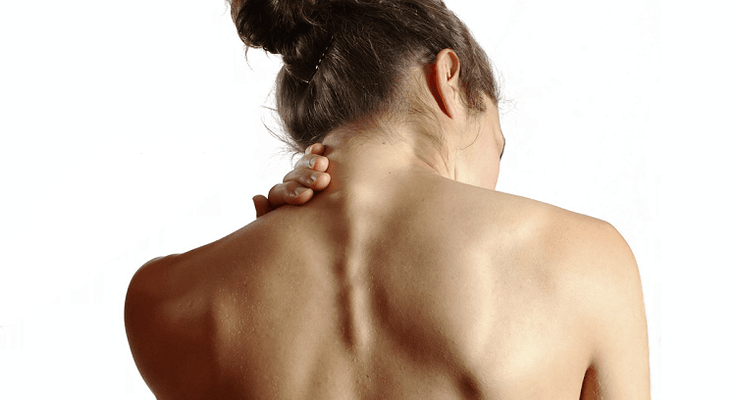
Unlike the other two types of osteochondrosis, such as lumbar or thoracic, cervical osteochondrosis has a number of distinctive features.This is due to the fact that in this area the structure of the vertebrae is different;their structure is much smaller than the others.The neck should rotate freely;it is the most mobile part, and also the most subject to constraints.In this regard, painful sensations appear there most often.

Since a large number of nerve and vascular formations pass through the neck region, the patient suffers from headaches and ischemia of the spinal cord or brain may develop.At night, the fingers become numb, it is difficult to fully control the hand, the temperature drops, and blue discoloration and swelling may appear in the hand.At the same time, blood supply to the brain becomes difficult, as the vertebral artery is compressed, leading to symptoms such as loss of coordination, loss of vision and hearing, and dizziness often occurs.
Even a small load is enough to cause the vertebrae to move.You can overload your neck muscles.The result is compression of blood vessels and nerve endings.Over time, osteophytes form, which aggravate the situation and the disease is difficult to cure.
The pain can affect not only the neck, but also the limbs, most often the arms.This is the result of compression of the spinal cord.
Osteochondrosis can be cured, but this requires systematicity and perseverance.Often, when the first symptoms are relieved, the patient interrupts treatment, but the disease will not hesitate to reappear, since it will only begin.
How do you understand that an illness must be treated?
First of all, it should be noted that it is important to consult a specialist at the first symptoms of the disease, because it is the effectiveness factor that can cure the patient, and not relieve the problem for a while.If the disease progresses and it is no longer possible to qualify it as early stage, recovery is impossible.You should not treat osteochondrosis yourself;only a doctor can choose the right treatment regimen, accurately establish the diagnosis and course of the disease.
Without qualified help, you can aggravate the situation and even harm your body, not to mention cure it.
Such treatment is complex, different methods are combined, factors influencing the course and progression of the disease are taken into account, only then can it be localized or cured.
Measures taken for osteochondrosis
- pain relief;
- use of antispasmodics;
- tissue repair stimulators using ointments;
- manual therapy;
- therapeutic massages;
- hirudotherapy;
- physiotherapy;
- surgery.
Osteochondrosis of the cervical spine, degree 2, is a disease at the time of exacerbation and can be treated with analgesics and anti-inflammatory drugs.And only when the acute phase has passed, you can start treatment using other methods, not forgetting that diet is also important.
It is a misconception that this disease occurs more often in middle-aged and older people and that they are not afraid of grades 2 and 3 of the disease.
More and more young people suffer from osteochondrosis, so the disease is getting younger.And this is due to certain factors:
- poor posture;
- injuries;
- scoliosis;
- impaired metabolism;
- stress;
- large body weight;
- lack of physical fitness.
Young people spend many hours, even several days, in front of the computer, and this leaves its mark;the percentage of healthy young people is getting smaller and smaller.But not only lack of physical activity can affect the onset of the disease, but also excessive work, overload and an incorrectly selected training program for athletes.

Polysegmental osteochondrosis
There is polysegmental osteochondrosis of the cervical spine, and this concept is not clear to everyone.In fact, this is a manifestation of the disease not in one place, but in several at once;it is more difficult to heal.As you know, the spine is divided into several sections:
- cervical;
- chest;
- lumbar;
- sacred;
- coccygeal
Problems even in one place cause a lot of trouble and pain, and if the disease affects several departments, then it is quite difficult to determine the disease by symptoms.The painful manifestations are too numerous and all mixed together, which makes diagnosis difficult.This can only be done by contacting a qualified specialist, and it makes no sense to delay it.
Diseases of the cervical spine, for example, are manifested by severe headaches and pain in the lumbar region occurs during exertion.The thoracic region may not manifest itself for a long time, even if problems arise, but then it suddenly turns into intercostal neuralgia, and this syndrome greatly worries the patient.
Manifestation and symptoms
The general condition of the patient is not good, since pain can be felt almost throughout the body.Tingling sensations, headaches, heart pain, disturbances in internal organs, especially in chronic diseases.Therefore, it is difficult to determine the cause of all diseases, the degree of the disease, and you can easily make a mistake and choose the wrong direction of treatment.Simply taking an x-ray of an area of the spine is not enough to diagnose the extent and areas affected.But don’t worry;for a specialist, this problem can be completely solved, because it is not so rare.
Treatment
First, the pain is relieved with the help of painkillers and anti-inflammatories, and only then rehabilitation begins.It is this period that constitutes direct treatment, since osteochondrosis cannot be completely cured;it quickly becomes chronic.
Currently, many alternative treatment methods are offered, but they should be treated with caution, since manual therapy is only useful if carried out by a competent specialist.Physiotherapy using the Bubnovsky method, for example, causes a lot of controversy.And treatment with medicinal leeches can cause allergies.
Prevention
Remember that it is easier to prevent a disease than to treat it for a long time and sometimes unsuccessfully.Therefore, as a preventive measure, we can recommend doing special exercises that develop neck flexibility.It is also good to strengthen and stretch these muscles to prevent the development of diseases.